• Escape Recurring Pain

    — one small win at a time.

    I help active, mature adults stop chronic musculoskeletal pain and restore pain-free movement.

    Through an evidence-based body+mind, client-led approach, I guide you towards solving chronic, recurring pain that lasts.

  • § WHY I DO THIS

    Pain doesn’t have to run the show.

    When pain is loud, unpredictable, or all-consuming, it can crowd out so much of your life. If you’re restricted from everyday activities, fearful of moving, or feeling stuck in cycles, you’re not broken. There is another way to deal with pain in your body. There is a way towards lasting improvement that gives you agency.

  • § DOES THIS RESONATE?
    Section image

    Why does pain keep coming back?

    I’m guessing this isn’t the first time you’ve sought help for your pain. Most therapeutic care treats the symptom — the quick fix — but leaves the pattern behind. Most care is applied to your body by an expert, without you understanding what they’re doing or how it works.

    Those therapies and treatments give you relief. But the specialists can’t follow you around in your day-to-day life, ready to make adjustments for you when something suddenly gets tweaked.

    So pain returns.

    Mujō takes the opposite approach. First, I teach you how to be your own pain expert. Everything we do is guided by your awareness of how you feel.

    Second, you’ll develop skills and practices you can use whenever you notice signals of on-coming pain—so you can defuse it before it blows up.

    That’s how you stop reliving the same injury story.

  • § WHY THESE SESSIONS WORK

    Small incremental wins.

    Lasting results.

    Movement sleuthing

    Long-term pain in one spot is often not caused by local problems alone. Commonly, something we injured a long time ago is the root cause. Through small, safe, guided movement, I’ll help you ferret out the line of compensation dominoes to the source of your pain.

    You’re the expert

    You’re the only one who knows what it feels like when you move. You’re the only one who knows exactly where the pain is and how it feels. So you become the captain on this journey towards movement freedom. Think of me as your trusted GPS and kit of therapeutic yoga tools.

    Pain-free retraining

    We work inside your current pain-free capacity until the body repatterns and recoordinates movement — without pain!

    Everyday awareness

    The benefits aren’t only available during our one-hour sessions. Your pain-free journey continues while you go about your daily living, becoming more and more attuned to your green, yellow, and red flags. With your new skills and sensitivity, you’ll be able to keep pain from resurfacing.

    Progress tracking

    Starting with your current body map of pain, tension, and stiffness, we’ll track the changes as you eliminate them one by one.

    Growing capacity

    No pain.

    No fear.

    No limitation.

    More potential.

  • 1-on-1 Therapeutic Yoga Series for Pain

    8 sessions over 12 weeks

    Start with the Shoulders and Hips Series
    Section image
  • § HOW IT WORKS

    1

    Your Body Map

    Before we meet, I’ll send you a form with body outlines for you to highlight the areas where you have pain, tension, or tightness. You’re welcome to leave any notes you wish. You’ll send this back before our first session.

    2

    The Story of Pain

    At the first session, I’ll ask you to tell me the story of your Body Map and any relevant medical history. I’ll also ask you to rank the pain areas by priority. We’ll call whatever you rank as number one the “meaningful complaint.”

    3

    Physical and Energetic Assessment

    Based on your meaningful complaint, I’ll make a physical and/or energetic assessment as a foundation for how we’ll proceed.

    4

    Yoga Offerings

    I’ll start by guiding you through an opening relaxation exercise, then proceed to address the meaningful complaint through a series of yoga-based practices. We always end the session with a few minutes in full stillness, or savasana, to allow the body to integrate the work. Throughout the yoga practice, you are empowered to choose options that feel right for you.

    5

    Debrief

    At the end of the session, we spend a few minutes debriefing; you’ll give me feedback on how things felt and what differences you notice from before to after in pain relief. I’ll give you a programme to do at home until the next session.

    6

    At Home

    Between sessions, you’ll become aware of when pain comes on and perhaps what if any signs you noticed. You may also notice when the pain goes away. You may also find time to do the home programme.

    7

    Next Sessions: Small Changes

    Subsequent sessions will start with review of the body map to talk about what if anything has changed. For the first three or four sessions (depending on how much work you do at home), we might see small improvements until suddenly a big shift happens and you find more capacity where there once was very little.

    8

    Final Sessions: Big Changes

    With greater capacity, we’ll be able to add bigger movements until we find the edge of the stretch. Here, we can play with both lengthening and strengthening. By the end of the session, you’ll be working with your muscles at closer to their full capacity and able to stretch and strengthen without pain.

    9

    Next Series?

    Restoring one joint to pain-free capacity may make you excited to move onto another joint. We can restart the process at the next priority spot on your body map. Or, you might feel you have the tools and expertise in your own body to explore them on your own.

  • § WHO I HELP

    People who benefit from these sessions

    experience:

    Chronic pain

    Recurring pain

    Intermittent pain

    Inflammatory pain

    Untreated past injuries

    Repetitive use injuries

    Sports injuries

    include:

    Yoga practitioners

    Former athletes

    Former dancers

    Musicians

    Camera operators

    Physical labourers

    Desk workers

    + You!

  • § HOW MUJO IS DIFFERENT

    Mujō means “impermanence.”

    Everything I do with clients begins by embracing impermanence and adapting to change.

    Pain is impermanent. It too can shift and change.

    If you do nothing about your pain, entropy (chaos) takes over and disorder in your body spreads. Pain in one area leads to pain elsewhere as your body tries to solve how to move without triggering the original source.

    Instead, you might accept that pain can also change in the opposite direction: it can go away.

    If you’ve gone to other pain and movement experts—physiotherapists, massage therapists, exercise physiologists, shiatsu therapists, acupuncturists, osteopaths, etc.—they’ve likely helped give you pain relief for some period. That’s fantastic. That means your pain can go away.

    What makes the therapeutic yoga approach different

    from those modalities is we treat the client as the expert. You listen to your body, then we listen to you. Ours is a collaborative relationship with both sides holding half the solution.

    What makes me different from other yoga therapists is that I treat each client as a unique being adapting in unique ways. I believe in small incremental wins that prove how long-term pain can respond to effective noticing and retraining.

    Nothing is inevitable except change.
  • § WHO I AM

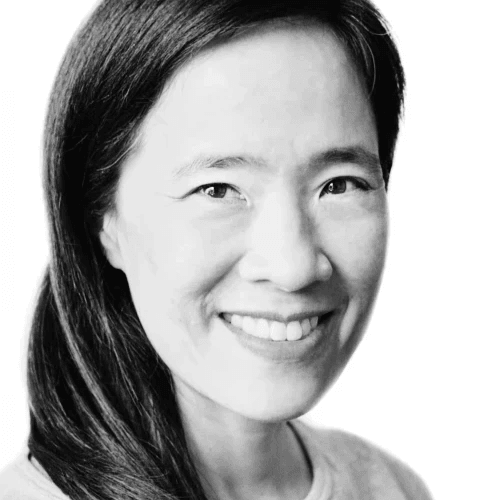
    Hi, I’m Margaux

    I first tried yoga because I wanted an exercise to replace rowing, which itself replaced volleyball, which replaced gymnastics. While yoga gave me the movement work I craved, it also came with unintended but beneficial by-products through meditation and pranayama.

    I took my first teacher training with less than a year of practice, not so I could teach, not to get stronger in the poses, but to learn about yoga’s heritage. My only goal was to be able to teach yoga to my ageing parents safely.

    But then I hurt myself. Yes, the 5-min long downward dog challenge in hot yoga was a bad idea. This caused right shoulder pain because my right shoulder was already compromised from repetitive use from photography and computer use. I found relief through osteopathy and physiotherapy treatments and strengthening exercises and returning to rock climbing.

    And then perimenopause came. Like many women, I had no idea how much my joints were benefiting from estrogen until my estrogen levels went down. I had frozen shoulder that got worse for months before I found an osteopath to work on it. This help give me more ease and movement back, even though the pain and range of motion did not fully return for about 18 months—what I later learned is the norm for frozen shoulders in women going through perimenopause.

    Meanwhile, in the last few years, I’ve noticed other weird body imbalances. More than 40 years ago, I badly sprained the ligaments in my right ankle. It healed after 6-8 weeks and felt fine for years. What I didn’t notice was the micro-compensations my body made to protect that ankle. Over time, the ankle started to cause my direct problems and this increased the compensations.

    This is how our bodies are so proactively intelligent, managing pain and discomfort behind the scenes without asking for our conscious approval.

    Using therapeutic yoga, I’m now helping mature adults disrupt both pain patterns and creative compensations so they can reawaken their innate abilities to rebalance body and mind

  • Logo for The Roll Model, a certification from Tune-Up Fitness.
    RYT 200 Yoga Alliance badge.
    Canadian Yoga Alliance logo
    Logo for Body by Breath, a certification from Tune-Up Fitness.
  • All things will change.

    Including your pain.

  • FAQs

  • Got Questions?

    Reach out!

    Name *
    Email *
    Phone
    Message *